

0.9-m telescope
While owned and operated by University to Texas, the 0.9-m telescope is no longer scheduled as a McDonald Observatory research telescope. Currently, observing time on the telescope is used for public educational programs. The programs consist of Special Viewing Nights and Teacher Professional Development Workshops.
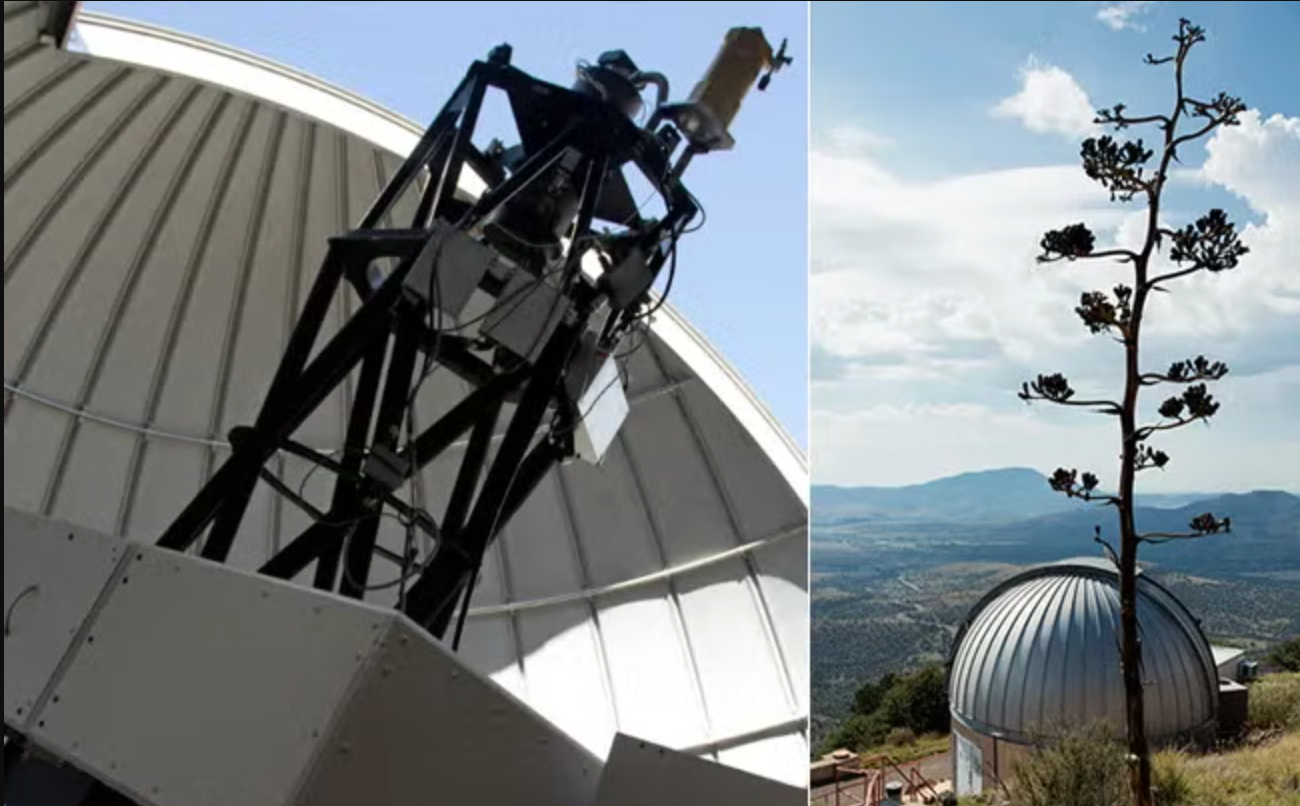
0.8 m telescope
Due to technical issues with the telescope controls, the 0.8 meter telescope is currently not available for use.
One of the 0.8 meter Telescope's greatest advantages was its field of view. The telescope could observe a patch on the sky three-quarters of one degree across (the full moon is about one-half of a degree across). With this capability, the 0.8-meter Telescope is ideal for large search and survey projects, but which have been generally superseded by large-scale ground-based (e.g. SDSS, Pan-STARRS) and space-based (e.g. Gaia, NeoWISE) surveys. Contingent on future science use cases and resource availability, refurbishment may be considered.

McDonald Geodetic Observatory
Initiated during the Apollo Era as one of the first and most productive NASA lunar laser raging stations, the observatory has been updated and expanded as the McDonald Geodetic Observatory, advancing a new era of global sub-millimeter scale geodetic science.

Las Cumbres Observatory Global Telescope
McDonald hosts one of the nodes of the Las Cumbres Observatory Global Telescope and receives 15% of the telescope time on the global network. The first 1 m telescope in the network achieved first-light at McDonald on March 31, 2012.

1.2-m MONET Telescope
McDonald hosts one of the two robotically controlled telescopes of the Monitoring Network of Telescopes (MONET) project. The twin is in South Africa.

20-inch Telescope
The observatory hosts a 20-inch telescope for Boston University's Imaging Science program. Optical Aeronomy at Boston University
These facilities are operated by their respective organizations.